How to Choose an Injection Molding Machine for Your Product
Choosing an injection molding machine is not about buying the biggest tonnage or the lowest quote. It is about matching the machine to your product, material, mold and production target so that the line runs stably from the first shot.
This guide walks through the practical decision sequence used by production engineers and purchasing managers. It covers the core parameters you must define first, how those parameters translate into machine specifications, and when a standard machine is enough versus when you need a specialised configuration.
1. Start with the product, not the machine
Before looking at catalogues, collect these five data points:
| Data point | Why it matters | Typical source |
|---|---|---|
| Part dimensions (L × W × H) | Determines mold size and required platen / tie-bar clearance | 3D drawing or sample |
| Part weight (g) | Determines required shot size (usually 1.3–1.5× part weight for safety) | Sample weighing or CAD calculation |
| Material / resin | Affects screw design, barrel temperature, injection pressure and drying needs | Material data sheet |
| Number of cavities (or planned cavities) | Multiplies shot weight and influences clamping force and cycle time | Mold design or production plan |
| Target cycle time or annual output | Defines whether you need a standard, high-speed or multi-component machine | Production plan |
If any of these are missing, the machine recommendation will be incomplete. GREENST engineers normally request a product photo or drawing plus these five points before proposing a configuration.
2. Calculate the two primary machine parameters
2.1 Clamping force (tonnage)
Clamping force keeps the mold closed against injection pressure. A common rule of thumb is:
Projected area (cm²) × material factor (t/cm²) = required clamping force
Typical material factors:
- PE, PP, PS: 0.3–0.5 t/cm²
- ABS, PC, PA: 0.4–0.7 t/cm²
- High-viscosity or thin-wall parts: 0.7–1.0 t/cm² or higher
Always add a safety margin of 10–20 %. For multi-cavity molds, use the total projected area of all cavities plus runners.
GREENST machines cover 20 T to 2500 T. Most packaging, daily-use and small industrial parts fall in the 90–650 T range; large automotive or logistics parts often need 800 T and above.
2.2 Shot size (injection capacity)
Shot size must cover the total weight of parts + runners. A practical formula is:
Required shot size ≈ (part weight × cavities + runner weight) × 1.3–1.5
The 1.3–1.5 factor leaves room for process variation and avoids running the machine at maximum capacity on every shot. Undersized shot capacity is one of the most common causes of short shots and unstable quality.
3. Match the machine type to the application
Not every product needs the same drive system or configuration. Use the table below as a starting filter.
| Application / requirement | Recommended machine type | Key reasons |
|---|---|---|
| General daily-use, household, industrial parts | Servo-hydraulic | Energy saving, stable, cost-effective for most resins |
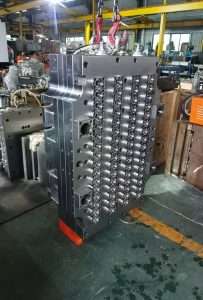
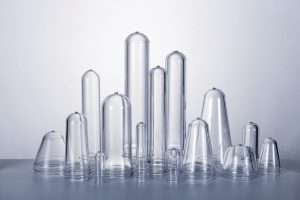
| PET preforms | Dedicated PET preform system | Specialised screw, mold space and cooling matched to preform weight and cavities |
| PVC fittings and profiles | PVC-configured machine | Corrosion-resistant screw/barrel, suitable temperature control |
| Thin-wall packaging, high-volume containers | High-speed machine | Faster injection and recovery for short cycle times |
| Two-material or two-colour parts | Double-colour / multi-component | Integrated rotary or moving platen for sequential injection |
| High-precision small parts, clean-room preference | All-electric | Precise position and pressure control, lower oil contamination risk |
| Insert molding, overmolding, limited floor space | Vertical machine | Gravity-assisted insert placement, smaller footprint |
A standard servo machine covers the majority of general plastic production. Specialised machines (PET, PVC, high-speed, double-colour) become necessary when material behaviour, cycle time or product structure exceeds the capability of a general-purpose unit.
4. Check mold compatibility and platen size
Even if tonnage and shot size are correct, the mold must fit.
Key checks:
- Tie-bar distance / platen size – must accommodate the mold base with clearance for installation and temperature control lines
- Max mold height / min mold height – must match the mold thickness
- Daylight opening – must allow part ejection and robot access if automation is planned
- Ejector pattern and force – should be compatible with the mold design
When the mold is not yet designed, share the product drawing and cavity plan. The machine supplier can then confirm whether a standard platen is sufficient or whether a larger mold space option is required.
5. Decide on auxiliaries and automation early
Machine selection is only part of a production-ready line. The following items should be considered at the same time:
- Material drying (especially for hygroscopic resins such as PET, PA, PC)
- Loading and conveying
- Mold temperature control
- Cooling (chiller capacity matched to cycle and mold cooling channels)
- Granulators / crushers for runners and scrap
- Robot or pick-and-place for high-volume or clean handling
- In-mold labelling (IML) if required for packaging
Treating auxiliaries as an afterthought often leads to longer commissioning time and unstable quality. GREENST can supply the machine alone or as part of a matched configuration that includes mold, auxiliaries and basic automation.
6. Practical selection checklist
Use this sequence when evaluating any quotation:
- Confirm product weight, cavities, material and target cycle.
- Calculate required clamping force and shot size with safety margin.
- Select machine type according to the application table above.
- Verify platen size, mold height and daylight against the mold design.
- List required auxiliaries and decide whether they are included or separate.
- Check factory testing scope (safety functions, hydraulic performance, temperature control, automatic cycle).
- Clarify delivery scope, spare parts list and remote support capability.
- Compare total cost of ownership (energy, maintenance, expected uptime), not only machine price.
7. Common mistakes to avoid
- Choosing tonnage only by “similar products” without calculating projected area.
- Ignoring runner weight when sizing shot capacity.
- Buying a general machine for PVC or PET without the correct screw and barrel.
- Leaving mold design and machine selection disconnected until the mold is finished.
- Focusing only on purchase price and overlooking energy consumption, spare parts and service response.
- Accepting vague “turnkey” claims without a clear list of what is included and tested before shipment.
8. When to request a custom configuration
A standard catalogue machine is usually sufficient for general products. Consider a custom or application-specific configuration when:
- The material is corrosive, abrasive or thermally sensitive (PVC, certain filled compounds).
- Cycle time targets require high injection speed or parallel movements.
- The product needs two materials or two colours in one cycle.
- Clean-room or precision requirements exceed standard hydraulic control.
- The mold is unusually large or requires special ejector / core-pull arrangements.
In these cases, provide the product drawing, material grade and target output. An engineer can then propose the matching clamp force, screw design, mold space and auxiliary list.
Frequently asked questions
How do I know if I need a servo or an all-electric machine? Servo-hydraulic machines offer a strong balance of energy saving and cost for most general applications. All-electric machines are preferred when position accuracy, clean operation or very low energy use is critical. Many projects start with servo and move to electric only for specific precision parts.
What information should I send to get an accurate recommendation? Product name or photo/drawing, approximate dimensions and weight, material grade, number of cavities (or planned cavities), and target output or cycle time. Budget range and preferred project start date help prioritise options.
Can one machine run several different products? Yes, provided the clamp force, shot size and mold space cover the range of molds. Changing molds and process parameters is normal. Extreme differences in material or part size may still require separate machines.
How important is the manufacturer’s factory testing? Very. A machine that has been run through safety, hydraulic, temperature and automatic cycle checks before shipment reduces start-up risk. Ask what specific tests are performed and whether a test report is supplied.
Should I buy the mold and machine from the same supplier? It is not mandatory, but coordination between mold design and machine specification (platen size, ejector, cooling, cycle) reduces interface problems. Many buyers prefer a single point of responsibility for the complete configuration.
Next step
If you already have a product drawing or sample, the fastest way to move forward is to share the five data points listed at the beginning of this article. GREENST engineers will review the application and recommend a suitable injection molding machine configuration (and supporting equipment if needed).
Request a machine recommendation → [Contact / enquiry form on INJMACHINE.com]
This guide is intended for factory owners, production managers and purchasing teams evaluating plastic injection molding machines in the 20 T–2500 T range. It reflects common engineering practice and does not replace a detailed project review.